The Effect of the Dakon Game on the Cognitive Function of the Elderly at the Turusgede Rembang PPSLU
DOI:
https://doi.org/10.34012/jukep.v9i1.7760Keywords:
traditional Dakon games, cognitive function, elderlyAbstract
Cognitive decline is often considered a natural condition in the elderly. However, this disorder can cause forgetfulness, difficulty concentrating, and communication difficulties, impacting daily activities and quality of life. One non-pharmacological intervention that can be used to improve cognitive function is the traditional game of Dakon. This study aimed to determine the effect of Dakon on the cognitive function of elderly people at the Turusgede Rembang Community Learning Center (PPSLU). The study used a quantitative pre-experimental design with a one-group pre-post test and a cohort approach. The study population consisted of 30 elderly people with cognitive decline, and 28 were selected using a purposive sampling technique. The research instruments included the Mini Mental State Examination (MMSE) questionnaire and the Dakon game standard operating procedures (SOP). Data analysis was performed using the Wilcoxon test with a significance level of α=<0.05. The results showed a ρ value of 0.000<0.05, thus accepting H₁, indicating that Dakon significantly improves cognitive function in the elderly. Most respondents experienced improved cognitive scores due to their ability to follow the game stages well, concentrate, and cooperate during the intervention. One respondent experienced no improvement in cognitive function, influenced by factors such as advanced age, low education level, lack of social interaction, and health conditions such as hypertension. It can be concluded that the traditional Dakon game is an effective non-pharmacological intervention in improving the cognitive function of the elderly at the Turusgede Rembang PPSLU.
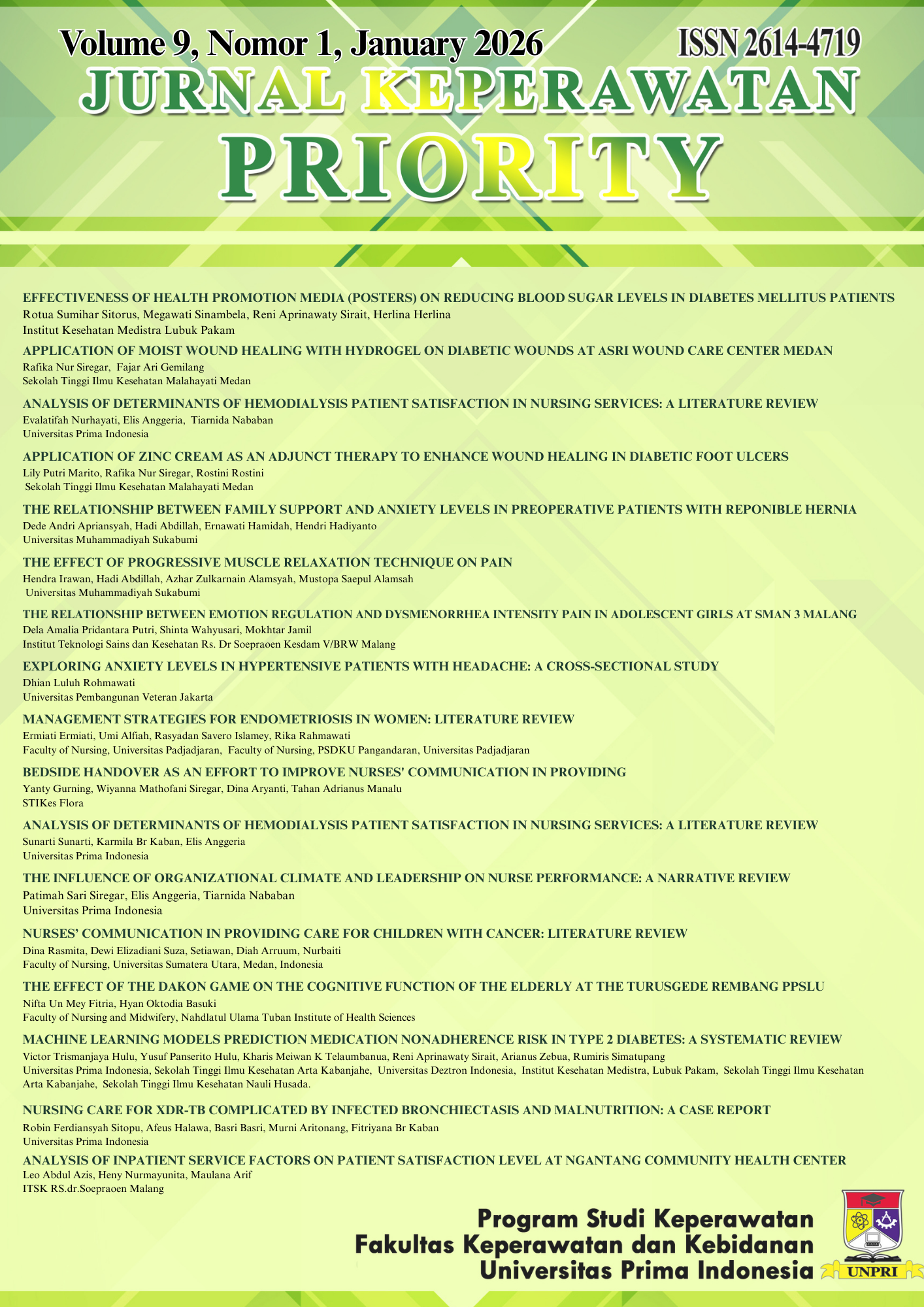
Downloads
Published
How to Cite
Issue
Section
License
Copyright (c) 2026 Nifta Un Mey Fitria; Hyan Oktodia Basuki

This work is licensed under a Creative Commons Attribution 4.0 International License.
Authors who publish their manuscripts through the Journal of Keperawatan Priority agree to the following:
- Copyright to the manuscripts of scientific papers in this Journal is held by the author.
- The author surrenders the rights when first publishing the manuscript of his scientific work and simultaneously the author grants permission / license by referring to the Creative Commons Attribution 4.0 International License to other parties to distribute his scientific work while still giving credit to the author and the Journal of Journal Keperawatan Priority as the first publication medium for the work.
- Matters relating to the non-exclusivity of the distribution of the Journal that publishes the author's scientific work can be agreed separately (for example: requests to place the work in the library of an institution or publish it as a book) with the author as one of the parties to the agreement and with credit to sJournal ofJournal Keperawatan Priority as the first publication medium for the work in question.
- Authors can and are expected to publish their work online (e.g. in a Repository or on their Organization's/Institution's website) before and during the manuscript submission process, as such efforts can increase citation exchange earlier and with a wider scope.